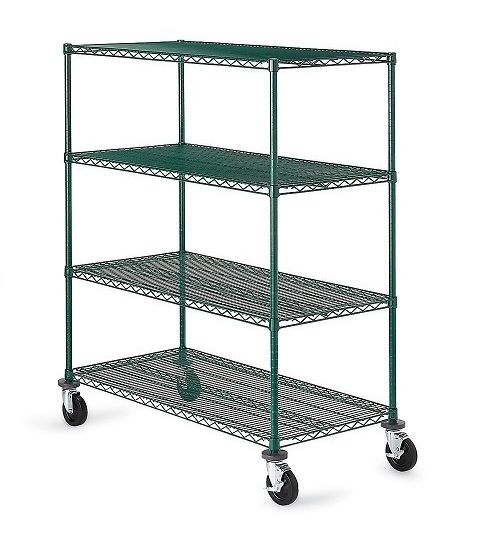
To choose a suitable wire shelving unit manufacturer, first clarify your usage environment and load-bearing requirements. Manufacturing processes, surface coatings, and related industry certifications are key indicators for measuring the level of manufacturers.
Core selection criteria
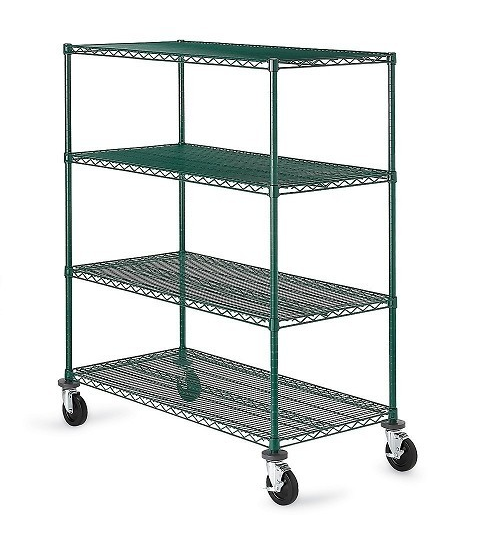
Finishes: The coating directly determines the durability and usage environment of the shelf.
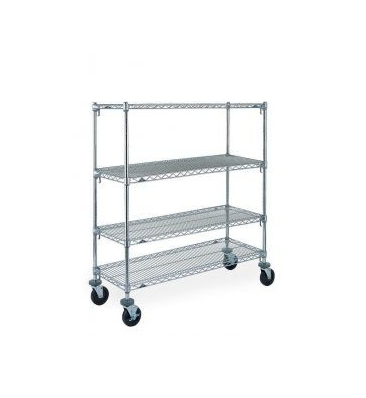
Chrome: Suitable for dry environments such as offices and retail stores, it has a bright appearance but is prone to rusting.
Epoxy Coated: Suitable for humid environments such as cold storage and dishwashing rooms, with strong rust prevention ability.
Stainless Steel: Suitable for laboratories or extremely hygienic environments, with the strongest corrosion resistance and the highest price.
Certification and Compliance:
NSF certification: If used in the food storage or medical industry, NSF (National Health Foundation) certification is essential as it ensures material safety and ease of cleaning.
ISO 9001: Proves that the manufacturer has a stable quality management system.
RMI/R-Mark: For industrial grade heavy-duty shelves, this certification represents compliance with rigorous design and safety standards.
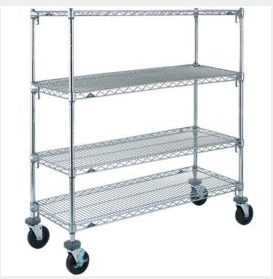
Weight Capacity: Check the rated load-bearing capacity of each shelf layer (usually ranging from 300 pounds to 2000 pounds). Please note that installing casters (universal wheels) usually reduces the overall load
Practical advice for you:
Request for samples: For bulk orders, manufacturers should be requested to provide pre production samples to check whether the solder joints are flat and whether the coating is uniform.
Confirm system scalability: Select the manufacturer that provides the “Starter” and “Add on” design. Additional units can share columns, saving space and costs.
Diversity of accessories: Excellent manufacturers should provide a wide range of accessories, such as label racks, laminated dividers, fencing, and anti-static accessories.